
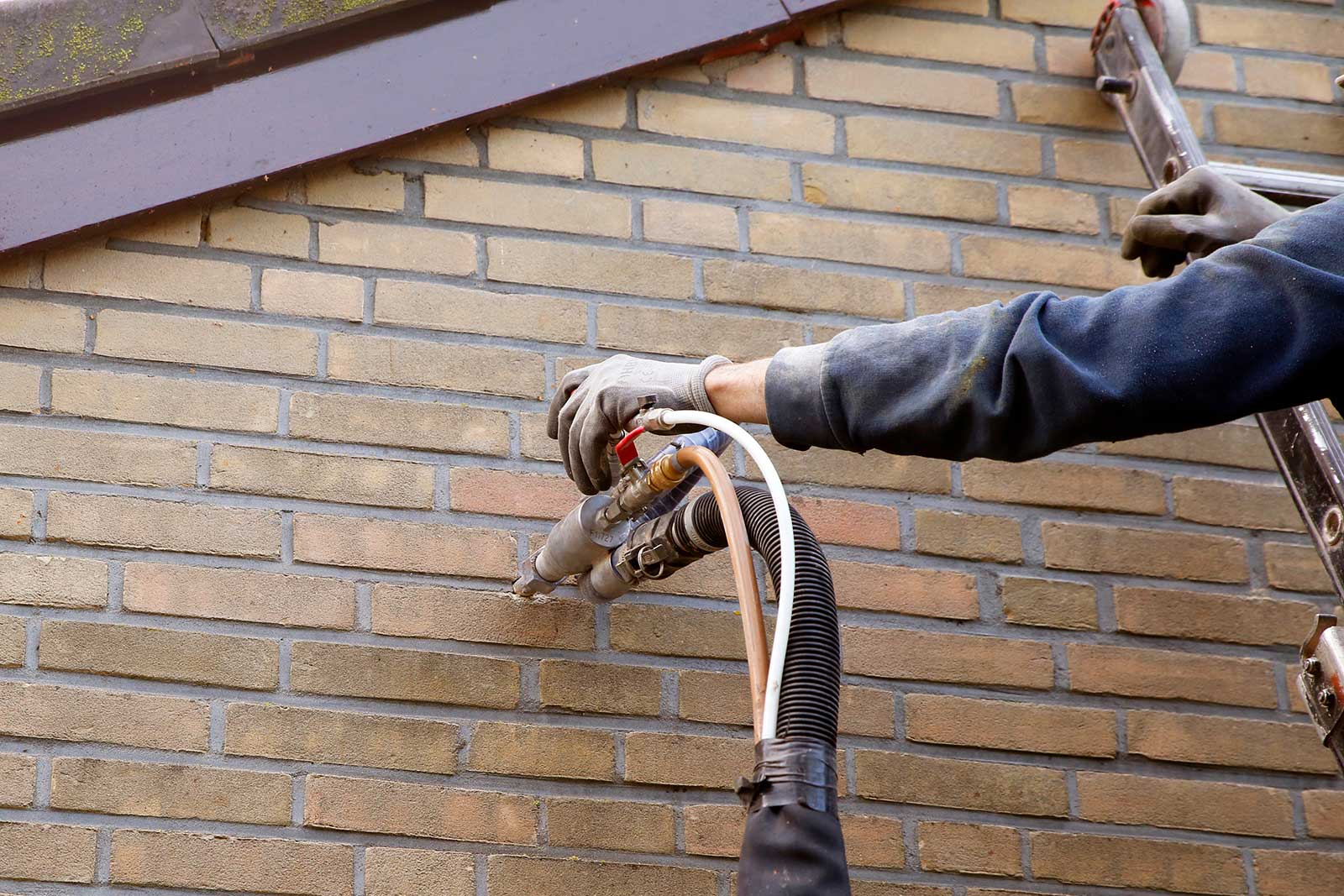

Cavity wall insulation is installed in the gap between the inner and outer leaves of a cavity wall. Filling a suitable cavity can reduce heat transfer through the wall and help improve the thermal performance of a property. The method is not suitable for every building, so a pre-installation survey is essential.
The age of a property alone does not confirm whether cavity wall insulation is suitable. Wall construction, cavity width, debris, existing insulation, external wall condition, exposure to wind-driven rain and the property's moisture history all need to be considered.
How cavity wall insulation works
For many suitable masonry cavity walls, insulation material is introduced into the cavity through small drilled holes in the external wall. The holes are then filled and the wall finish is made good as agreed. The exact method and material depend on the building and the approved installation system. Other wall constructions require different solutions and should not be treated as standard cavity-fill projects.
Potential benefits
Can reduce heat loss through a suitable uninsulated cavity wall.
May help rooms feel more comfortable by improving wall thermal performance.
Can support a wider home energy-efficiency improvement plan.
The installation process can often be completed externally, limiting disruption inside the property.
Is your property suitable?
The survey should confirm that the walls have a suitable cavity and that the cavity is clear and in an appropriate condition. The external masonry and pointing should be sound. Properties in exposed locations, those at risk of flooding, buildings with narrow or uneven cavities and walls with unresolved damp may not be suitable for standard cavity-fill insulation. Existing defects should be repaired first.
The survey and installation process
Review available property information, including wall type and any previous insulation work.
Inspect the external walls and assess cavity suitability using appropriate survey methods.
Check exposure, moisture risks, condition of pointing, gutters, roof details and relevant building features.
Explain the proposed material, installation method, guarantee arrangements and any limitations.
Install only if the property is assessed as suitable and the customer accepts the written specification.
Provide the relevant handover information and any applicable guarantee documentation.
Cavity wall insulation or external wall insulation?
Cavity wall insulation fills a suitable cavity within the wall. External wall insulation adds a layer to the outside of the building. The correct option depends on wall construction and condition. A solid wall does not have a cavity that can be filled, while an existing cavity may be unsuitable for insulation if it is too narrow, obstructed or exposed to moisture risk.
Arrange a cavity wall insulation survey
If you are unsure what type of wall your property has, do not guess. Contact us with the postcode, property age if known and photographs of the external walls. A suitable assessment can establish whether cavity wall insulation is an option.